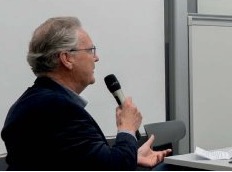

Hirut von Lany, Consultant Ophthalmologist, and Leo Feinburg, Ophthalmic Trainee at the West of England Eye Unit, organised a fantastic meeting at the University of Exeter entitled “Shaping the Future of Ophthalmic Care”.
The meeting explored a wide range of topics, highlighting the future direction of ophthalmic care and the exciting innovations on the horizon.
The first presentation was delivered by Professor Mitra Tavakoli, who discussed corneal imaging and its potential to reveal disease beyond the eye. The cornea, the transparent window at the front of the eye, may provide valuable insights into systemic conditions, including diabetes and neurodegenerative disorders.
The next talk by Serene Ling explored advances in genomic sequencing, which have made it increasingly quick and accessible to analyse an individual’s DNA and understand its role in inherited retinal diseases.
Rumana Hussein then presented on ocular oncology, demonstrating how artificial intelligence (AI) is increasingly being used to interpret ophthalmic images and support the diagnosis of eye tumours.
The keynote speaker, Dr Xand van Tulleken, turned his attention to the wellness industry, challenging the widespread use of nutritional supplements and emphasising that many are unnecessary for people who follow a healthy, balanced diet. He also highlighted the importance of dental flossing, explaining how good oral health may contribute to reducing the risk of wider health problems, including cardiovascular disease, diabetes and cognitive decline—as well as helping to prevent bleeding gums!
Peter Simcock chaired a session on diabetic eye disease, featuring Professor Tunde Peto, who discussed ways to improve eye screening and ensure more equitable access to eye care.
Peter also chaired a fascinating discussion on oculomics—an emerging field that uses advanced retinal imaging to explore the links between the eye and wider systemic health. Modern high-resolution imaging allows us to visualise the living neural and vascular tissues of the retina in extraordinary detail. When combined with AI, this information may help identify early indicators of common conditions, including diabetes, Alzheimer’s disease, Parkinson’s disease and stroke.
Cicero famously described the eyes as “the windows to the soul”. Today, advances in retinal imaging and AI are helping us understand just how much the eyes can reveal about our general health. These developments offer exciting opportunities to detect disease earlier through non-invasive, painless techniques, potentially transforming how we identify and manage a range of common conditions.
Congratulations to Hirut and Leo for organising such an engaging and thought-provoking meeting.