
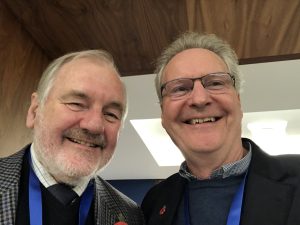
Prof David McLeod and Peter Simcock
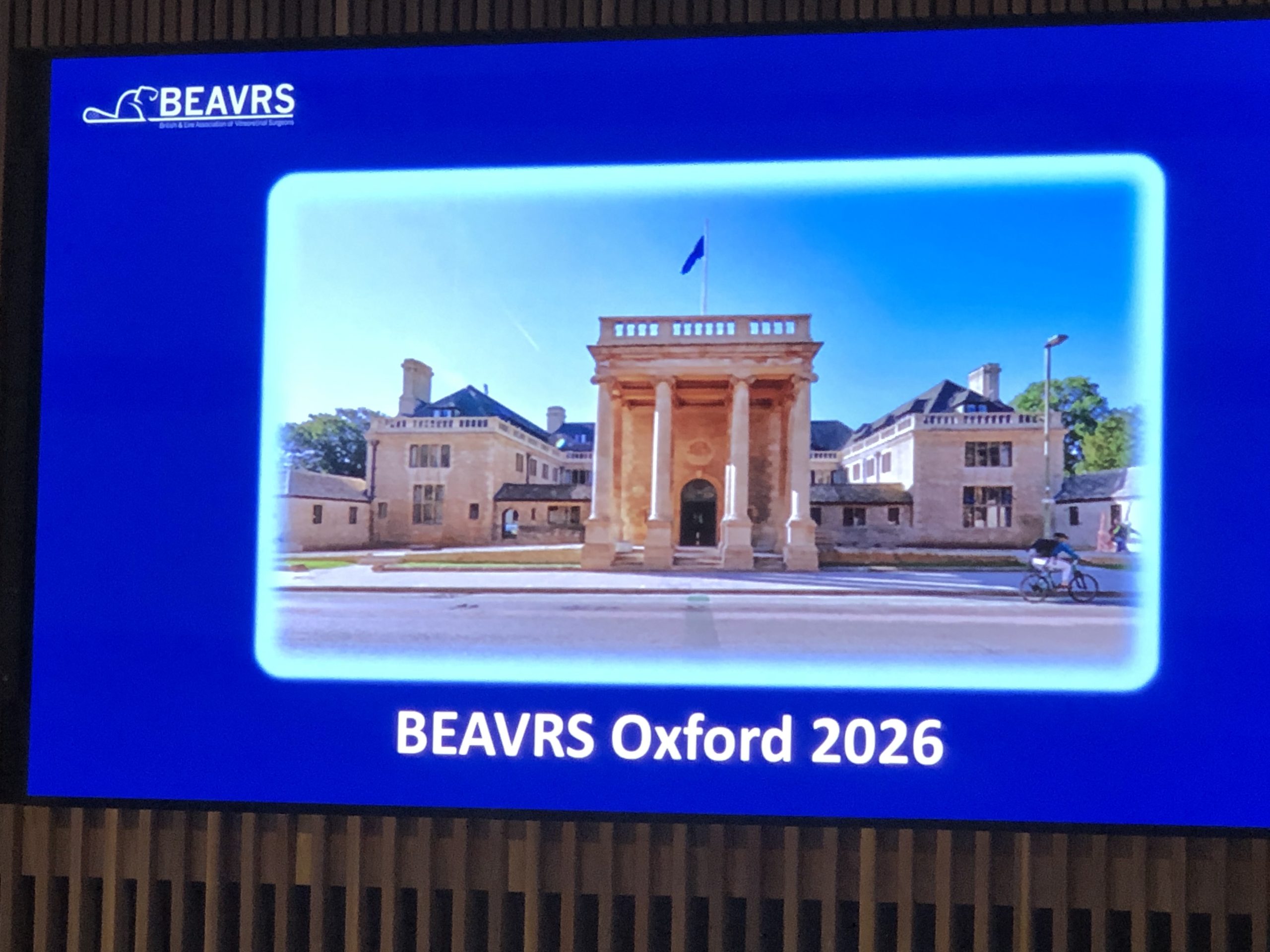
Mr Simcock recently attended a special meeting of the British & Eire Association of Vitreoretinal Surgeons (BEAVRS), held at Rhodes House in Oxford, to celebrate the 40th anniversary of the organisation’s founding.
BEAVRS brings together vitreoretinal surgeons from across the UK and Ireland, alongside invited speakers for all around the world.
One of the developments that particularly caught my interest was the progress being made in robotic-assisted eye surgery. While robotics has arguably not advanced at quite the same extraordinary pace as other areas of artificial intelligence, such as the large language models behind ChatGPT and Claude, exciting progress is being made.
One promising area is the use of robotic technology to cannulate the tiny blood vessels of the retina. These vessels are so incredibly fine that attempting to access them manually requires exceptional precision and an extraordinarily steady hand! Robotic assistance could potentially make procedures of this kind much more achievable.
Blockages in the retinal circulation are a significant cause of visual impairment. Retinal vein occlusion is a leading cause of sight loss in the UK and is among the most common retinal vascular conditions, alongside diabetic eye disease.
Clot-dissolving drugs have been used successfully for many years to treat blockages in larger blood vessels elsewhere in the body. However, applying these treatments to the delicate circulation of the retina has proved much more challenging, with limited success to date.
The hope is that, as robotic technology develops, it may eventually become possible to introduce treatment directly into these extremely small retinal blood vessels. If this can be achieved safely and reliably, it could result in exciting new possibilities for treating retinal vascular blockages at an early stage and potentially saving sight in patients who might otherwise suffer significant visual loss.
These meetings are about much more than the latest scientific and technological developments. They are also wonderful opportunities to catch up with old friends and colleagues.
For me, one of the highlights was being reunited with my former Professor, David McLeod. Professor McLeod was a true pioneer in the development of vitreoretinal surgery and was instrumental in inspiring me to pursue this speciality.
I was fortunate enough to train under him and learn many of the surgical techniques that have shaped my own practice throughout my career. Over the years, I have had the pleasure of passing on those same techniques to my vitreoretinal fellows who I have trained from around the world, particularly from Australia.
I have always been in awe of Professor McLeod’s remarkable combination of surgical dexterity, academic brilliance and, above all, his warmth and kindness as a person. He was an outstanding mentor, and it was a real privilege to have had the opportunity to learn from him during my training.
Seeing him again after all these years was therefore particularly special and was the best part of the meeting!